Question and success signal
The decision to make, the people to invite and the actions that will help you read the result.
We frame the riskiest question, build a journey real people can use and measure what happens so your next decision rests on evidence.
Scope your MVP First release delivered Pikoo turns a learning idea into a usable mobile journey. View the case study
You know you want to launch an MVP, but you do not need every answer. The first job is to choose what the product must prove.
Who do you want to help?
What should they be able to do?
What will show that the idea is useful?
What can you learn without building everything?
You can see what needs to be learned, what will be built and what will guide the next decision.
We define who you want to help, the action to test and the sign that will show whether the idea deserves a next step.
A prototype lets people try the important screens and steps. We fix unclear parts before full development begins.
We deliver one complete journey with the accounts, information and rules needed to put it in real hands.
We track important actions and feedback. These facts help you choose what to improve, add or remove.
The details depend on your idea. Every part must support the test, real use or the next decision.
The decision to make, the people to invite and the actions that will help you read the result.
The main screens and steps tested before complete development begins.
The first release lets a person complete the main action without false doors or missing steps.
Only what the product needs to work with real people and real information.
Simple signals show where people start, succeed, stop or return.
A first group uses the product. Facts and feedback guide what comes next.
Usage shows what truly helps, what gets in the way and what is missing. You can continue, adjust the idea or stop with more facts and fewer guesses.
If the first release needs to run in a browser, explore our web application development service .
To prepare the decisions that support a defensible budget, use our guide to scope a custom software project .
We built the mobile application, the system that stores its information and the tools that prepare quizzes for families in Quebec.
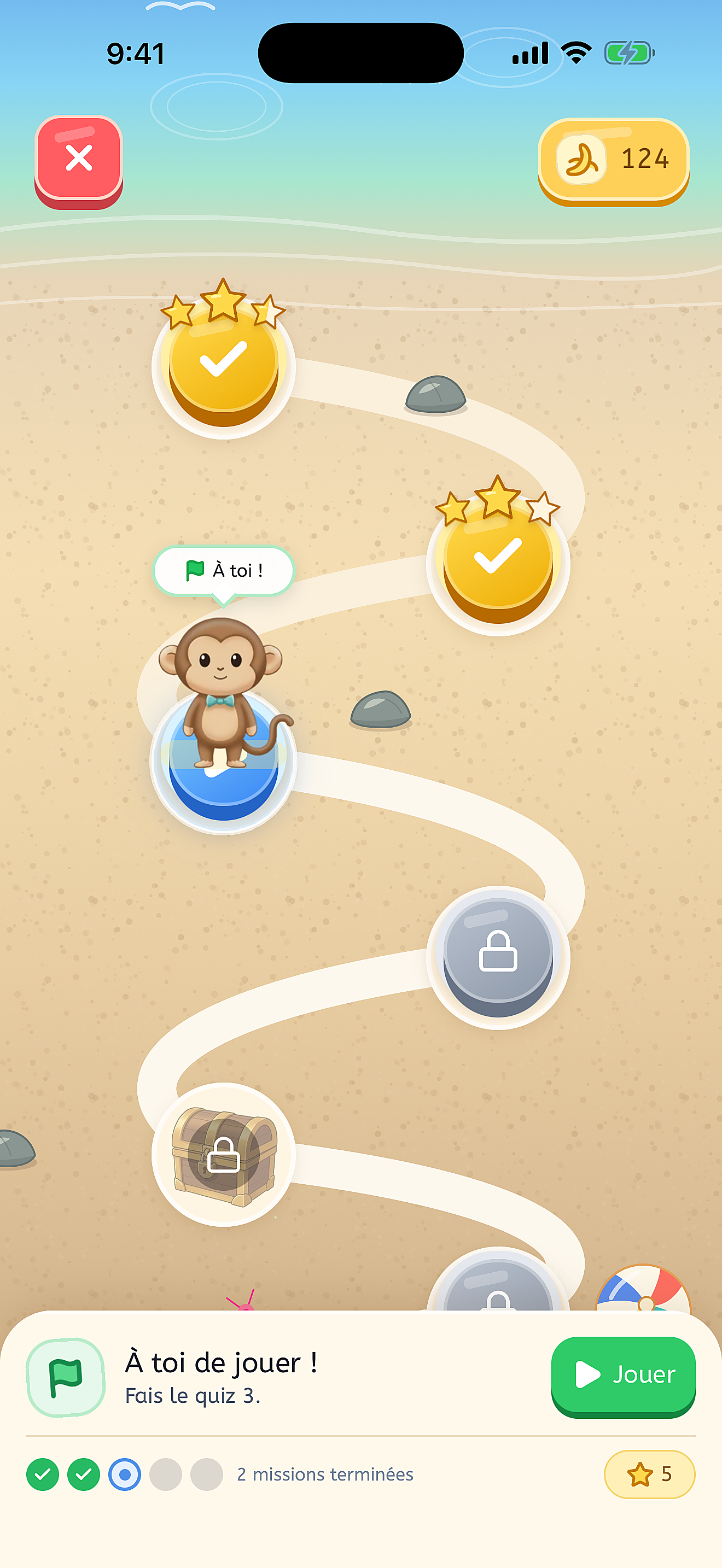 Mobile application
 Simple answers about price, timing, the first test, ownership and what happens after launch.
The price depends on the idea being tested, the number of screens and the features needed. Accounts, payments, connected tools and design depth also change the cost. We first frame the test and first release, then prepare a clear estimate.
Timing depends on the journey being delivered and the risks being tested. A product with a few screens and one action takes less time than a marketplace or an application with payments. The plan makes these stages clear before development begins.
An MVP should let one person complete the main action from start to finish. It also includes what is needed to protect accounts, keep the right information and measure use. Features that do not support the test can wait.
A prototype is mainly used to try the journey before development. An MVP is a real first release that people can use. The prototype can fix the plan, then the MVP can test real use.
The MVP should test the question that can most change your next decision. That question may be about usefulness, willingness to pay, ease of use or whether the service can be delivered. We connect every feature to that question.
No, but you need a plan for who will try the product. We can help define a small group that resembles the people you want to serve. Without tests or real use, the MVP cannot answer its starting question.
Yes. The right format depends on where, when and how people will use the product. We choose the format after clarifying the journey to test, not before.
An MVP must protect accounts and information from its first real use. We limit access, protect information as it moves and match the safety rules to the information the product keeps.
Ownership is written in the contract before the project starts. Our way of working is meant to leave you in control of the code, information and accounts needed to grow the product.
After launch, we review important actions, errors and feedback. You can then fix a problem, improve the journey, add a feature or rethink the idea. We can also care for the product during this stage.
Tell us the idea, the people you want to serve and the question you want to answer. We will help define a first release, the time needed and the choices that change the budget.